
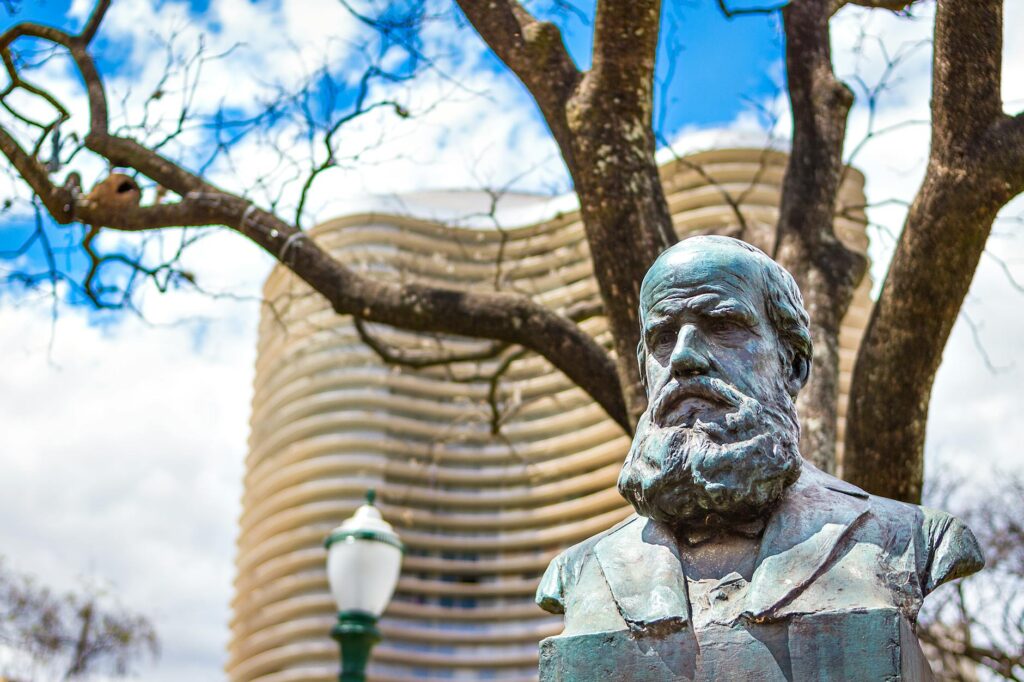
what’s Darwinian Socialism?
Darwinian Socialism represents a complex and often misunderstood intersection of evolutionary theory and socialist political thought. It’s not a unified ideology but rather a collection of ideas that attempted, controversially, to reconcile Charles Darwin’s work on natural selection with the goals of social reform and collective betterment. Unlike Social Darwinism — which often used evolutionary principles to justify inequality and laissez-faire capitalism, some proponents of Darwinian Socialism argued that socialist policies could actually build a more strong and healthy human population, aligning with evolutionary progress.
Last updated: April 22, 2026
This perspective faced significant debate. While some saw it as a progressive step, others critiqued it for potentially misinterpreting Darwin and for opening the door to harmful ideologies like eugenics. Understanding Darwinian Socialism requires looking at its historical context and the diverse interpretations it spawned.
The Core Idea: Evolution and Social Progress
At its heart, Darwinian Socialism proposed that human societies, like biological organisms, could evolve. Proponents believed that rather than hindering progress, socialist principles—such as cooperation, mutual aid, and social support—could actively contribute to the ‘survival of the fittest’ in a social sense. They argued that by reducing poverty, improving living conditions, and ensuring access to education and healthcare, society could enable individuals to reach their full potential, thereby strengthening the human stock.
This contrasted sharply with Social Darwinist ideas — which typically championed a brutal competition where the strong thrived and the weak perished, often used to defend existing power structures and oppose welfare measures. According to Encyclopædia Britannica (2023), Social Darwinism became a justification for unchecked capitalism and imperialism.
Historical Context: The Late 19th and Early 20th Centuries
The concept emerged in an era of rapid industrialisation and significant social upheaval across Europe, especially in the United Kingdom. Thinkers grappled with the implications of Darwin’s findings, published in On the Origin of Species in 1859, for human society. Many socialists were actively seeking ways to improve the lives of the working classes — who faced dire conditions in burgeoning industrial cities.
Some socialist thinkers, like the Fabian Society members Beatrice Webb and George Bernard Shaw, were influenced by evolutionary thought. They saw a potential compatibility between Darwinian principles and the goal of creating a more equitable society. Shaw, for instance, explored these themes in his plays, questioning societal norms and advocating for rational social planning. The Fabian Society, founded in 1884, aimed for gradual, democratic reform rather than revolution, and its members often engaged with scientific ideas of the time.
Key Figures and Their Interpretations
While no single figure definitively defined Darwinian Socialism, several individuals contributed to its discourse. Beatrice Webb, a prominent figure in the Fabian Society, expressed views that some interpret as aligning with Darwinian Socialism. In works like Our Partnership (published posthumously), she discussed the role of social selection and the importance of improving the ‘human stock’ through social reform. She believed that conscious social planning could lead to a healthier and more capable population.
Another figure sometimes associated with these ideas is Annie Besant, who, before her involvement in socialism, was a proponent of radical social reform and wrote on Malthusianism and population control, ideas that brushed against evolutionary thinking. It’s Key to distinguish these views from the cruder forms of Social Darwinism. For figures like Webb, the emphasis was on collective responsibility and social intervention to enhance human well-being, not on endorsing a free-for-all competitive struggle.
Darwinian Socialism vs. Social Darwinism
The distinction between Darwinian Socialism and Social Darwinism is critical. Social Darwinism, often associated with Herbert Spencer (who coined the term ‘survival of the fittest’ before Darwin published his key work), generally advocated for minimal government intervention, believing that social inequalities were natural outcomes of evolutionary processes. This view was used to justify opposition to welfare, trade unions, and any form of aid to the poor.
“The history of the European working classes in the nineteenth century is a history of their gradual conquest of political power, and their gradual rise in the economic scale. This has been not by the struggle of individuals but by the organisation of the class.”
— Beatrice Webb, The Co-operative Movement in Great Britain (1891)
Darwinian Socialism, conversely, often argued that socialist policies were the logical extension of evolutionary principles into the social sphere. Proponents suggested that by creating a supportive environment, society could nurture the ‘fittest’ individuals—those best suited to contribute to collective progress—rather than allowing them to be crushed by harsh economic competition. The emphasis shifted from individual struggle to collective advancement, guided by scientific understanding.
Criticisms and Controversies
Darwinian Socialism attracted significant criticism, both from within the socialist movement and from outside. A major concern was the potential for misinterpretation and misuse of Darwin’s scientific theories for political ends. Critics argued that applying biological concepts directly to complex human societies was flawed and that ‘survival of the fittest’ was being distorted to serve ideological agendas.
Also, the association, however tenuous, with eugenics became a significant point of contention. The eugenics movement, popular in the early 20th century, sought to ‘improve’ the human population through selective breeding and sterilisation. While not all proponents of Darwinian Socialism endorsed eugenics, the language of improving the ‘human stock’ and social selection certainly overlapped with eugenicist discourse. According to Nature (2010), the influence of eugenics was widespread, even among those with progressive aims.
Another line of criticism came from socialists who rejected any biological determinism, emphasizing instead the role of social, economic, and political structures in shaping human lives. They argued that focusing on inherent biological traits distracted from the urgent need to dismantle oppressive systems like capitalism. Karl Marx and Friedrich Engels, for instance, focused on historical materialism and class struggle, largely bypassing biological arguments.
Practical Applications and Modern Relevance
While Darwinian Socialism as a distinct movement largely faded by the mid-20th century, its intellectual legacy continues to inform debates about the relationship between nature, society, and political action. Today, discussions about social welfare, public health, and economic policy often implicitly or explicitly touch upon questions of human potential and societal progress.
Consider the concept of the welfare state. Many European nations, including the UK, have developed extensive social safety nets. Are these merely acts of charity, or do they reflect a societal understanding that supporting individuals—providing healthcare via the NHS, education, and social security—ultimately strengthens the nation as a whole? This echoes some of the underlying sentiments of Darwinian Socialism: that collective well-being contributes to a more strong society. According to the OECD Social Expenditure Database (2023), many European countries spend significant portions of their GDP on social protection. For example, in 2021, France spent over 30% of its GDP on social protection.
However, any attempt to link current social policies directly to Darwinian Socialism must be cautious. The ethical frameworks have evolved and the dangers of biological determinism and eugenics are now widely recognised. Modern approaches tend to emphasize social justice, human rights, and the role of environment and opportunity in shaping individual outcomes, rather than abstract notions of biological fitness.
The Debate Today
The core tension—whether social policies should aim to ‘improve’ the human population or simply ensure fairness and opportunity—persists. While the term ‘Darwinian Socialism’ is rarely used today, the underlying questions about nature versus nurture, individual potential, and societal responsibility remain relevant. Debates about genetic research, artificial intelligence, and global health challenges all engage with how we understand human progress and our role in shaping it.
In the end, the legacy of Darwinian Socialism works as a cautionary tale. It highlights how scientific theories can be co-opted for political purposes and the importance of ethical considerations in social policy. It also highlights the enduring human impulse to understand our place in the natural world and to shape a better future, even when the methods and justifications are contested.
Frequently Asked Questions
what’s the main difference between Darwinian Socialism and Social Darwinism?
Social Darwinism typically used evolutionary theory to justify inequality and laissez-faire capitalism, arguing that societal hierarchies were natural and that aid to the poor was counterproductive. Darwinian Socialism, conversely, often argued that socialist policies like cooperation and social support could actually enhance human well-being and societal progress, aligning with evolutionary principles in a more collective sense.
Did Charles Darwin support socialism?
Charles Darwin himself didn’t directly endorse socialism. His work focused on biological evolution through natural selection. While his theories were later interpreted and applied in various social and political contexts, including by those who identified as Darwinian Socialists, Darwin’s primary focus remained scientific observation of the natural world.
Who were key figures associated with Darwinian Socialism?
Key figures sometimes associated with ideas that overlapped with Darwinian Socialism include Beatrice Webb and George Bernard Shaw of the Fabian Society. They explored how social reform and rational planning could lead to a healthier and more capable population, drawing inspiration from evolutionary concepts but distinguishing their views from Social Darwinism.
What are the main criticisms of Darwinian Socialism?
Major criticisms include the potential for misapplying biological concepts to complex human societies, the risk of justifying harmful ideologies like eugenics (despite intentions to the contrary), and the distraction from systemic issues of economic and political inequality. Many socialists also rejected biological determinism altogether.
Is Darwinian Socialism still relevant today?
While the term itself is rarely used, the underlying questions about the relationship between social policy, human potential, and societal progress remain relevant. Debates about welfare states, public health initiatives, and genetic research continue to grapple with how society can best build well-being and advancement, though modern approaches emphasize ethics and social justice over biological determinism.
Conclusion
Darwinian Socialism represents a fascinating, albeit controversial, chapter in the history of political thought. It attempted to bridge the gap between scientific discovery and social reform, suggesting that socialist ideals could align with evolutionary progress. However, its inherent ambiguities and the historical context in which it emerged led to significant criticisms, especially concerning its potential links to eugenics and its departure from core socialist principles emphasizing systemic change. While the specific ideology may have waned, the questions it raised about society’s role in building human potential continue to resonate in contemporary policy debates, urging us to proceed with caution, ethical clarity, and a deep understanding of both biological and social dynamics.
Editorial Note: This article was researched and written by the Little Green Junk editorial team. We fact-check our content and update it regularly. For questions or corrections, contact us.