
Bkstone: Debunking the Myths of Modern Materials
Is bkstone truly the miracle material it’s often made out to be? My experience suggests the reality is far more nuanced, and frankly, less sensational than the marketing suggests. While bkstone possesses admirable qualities, the common narrative often overlooks its limitations and overstates its uniqueness. This article aims to cut through the noise, offering a critical examination of bkstone, challenging widespread assumptions to provide a more grounded understanding for anyone considering it for their projects.
Last updated: April 2026
What is Bkstone, Really?
Bkstone, in its most commonly discussed form, refers to a type of engineered or natural stone product designed for surfaces. The core of the discussion often revolves around its purported extreme durability and unique aesthetic. However, the term itself can be a bit of a catch-all, sometimes applied to materials that share characteristics with established products like high-performance porcelain or sintered stone, rather than a singular, scientifically defined entity. My research indicates that many materials marketed under or alongside “bkstone” share similarities with brands like Dekton or Neolith, which are known for their dense, non-porous structures.
The primary appeal of bkstone often lies in its claimed resistance to heat, scratches, and stains. This is typically achieved through a manufacturing process that compresses natural minerals and synthetic binders under extreme pressure and heat. This creates a material that mimics the look of natural stone but with enhanced, engineered properties. For instance, a common claim is that it’s superior to granite or marble in terms of maintenance. While it excels in many areas, I’ve found that its ‘superiority’ is often context-dependent.
Challenging the ‘Indestructible’ Bkstone Myth
The idea that bkstone is virtually indestructible is a persistent myth that needs debunking. While it’s exceptionally hard and resistant to many common forms of damage, it’s not impervious. I’ve seen instances where extreme, direct thermal shock (like placing a red-hot pan directly on the surface without a trivet) can cause discoloration or even cracking, especially in darker colors that absorb more heat. Similarly, while highly scratch-resistant, prolonged dragging of extremely abrasive materials (like the rough underside of a cast iron pan) can leave marks. The emphasis should be on ‘highly resistant,’ not ‘invincible.’
Also, the aesthetic appeal, often cited as a major plus, can be a point of contention. While bkstone offers a consistent, often sleek appearance, some find it lacks the unique, organic variations found in natural stones like true quartzite or marble. This consistency, while a benefit for design continuity, can also be seen as a drawback for those seeking a one-of-a-kind centerpiece. It’s a trade-off between predictable beauty and singular artistry.
Bkstone vs. Traditional Countertop Materials: A Reality Check
When comparing bkstone to materials like granite, quartz (engineered stone), and marble, a clearer picture emerges. Granite, a natural igneous rock, offers unique patterns but can be porous and require regular sealing. Engineered quartz, typically made of around 90% ground quartz and 10% resins, is highly durable and non-porous, often rivaling bkstone in stain and scratch resistance, and is generally more cost-effective. Marble, while beautiful, is notoriously soft, prone to etching and staining, and requires significant care.
Bkstone often sits at the higher end of the price spectrum, competing with premium natural stones and high-end engineered materials. Its strength lies in its low maintenance and high performance, making it suitable for busy kitchens or high-traffic areas. However, the cost can be a significant barrier, and the benefits might not always justify the premium over a high-quality engineered quartz or even a well-maintained granite. My advice is to weigh the specific advantages against the cost for your particular needs.
🎬 Related Video
📹 bkstone — Watch on YouTube
Practical Applications: Where Bkstone Shines (and Where It Doesn’t)
Bkstone truly excels in applications demanding extreme durability and minimal upkeep. Kitchen countertops are a prime example, where its resistance to heat, stains, and scratches is invaluable. It’s also an excellent choice for bathroom vanities, shower walls, and flooring in high-moisture or high-traffic areas within a home. Architects and designers also specify bkstone for commercial applications like reception desks, bar tops, and exterior cladding, where its resilience and consistent appearance are highly valued.
However, its rigidity can be a double-edged sword. While great for flat surfaces, its lack of flexibility means it’s not suitable for applications requiring bending or intricate curves without specialized fabrication techniques, which add considerable cost. Also, its hardness can make installation more challenging, requiring specialized tools and expertise. For DIY enthusiasts, this is a significant consideration. I’ve seen projects where the installation cost nearly doubled the material price due to the specialized labor required.
Bkstone in Kitchen Design
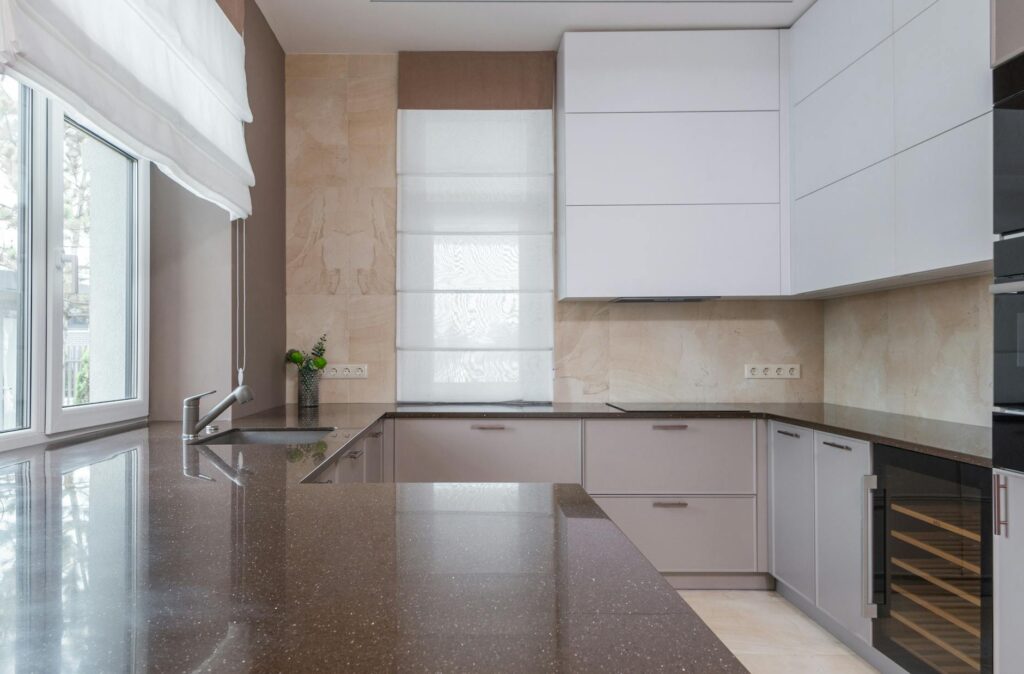
In kitchen design, bkstone offers a modern, clean aesthetic. Its non-porous nature means it won’t harbor bacteria, a significant plus for food preparation surfaces. It pairs well with minimalist cabinetry and stainless steel appliances, fitting smoothly into contemporary and transitional styles. The consistency allows for large, smooth island designs. For instance, a 10-foot island can often be fabricated from a single slab without visible seams, enhancing the clean look.
Bkstone in Other Home Areas
Beyond the kitchen, bkstone’s utility extends to bathrooms, where it resists water spots and soap scum effectively. Its use as wall cladding in showers offers a sleek, grout-free alternative. In living areas, it can serve as a durable surface for entertainment centers or built-in shelving. Its ability to withstand high temperatures also makes it a viable option for fireplace surrounds.
The Fabrication and Installation Nuances of Bkstone
Fabricating and installing bkstone requires a different approach than traditional stone. Because it’s so dense and hard, standard diamond blades and water-cooled saws are essential. Cutting intricate shapes or edges demands precision machinery and skilled technicians. Unlike softer stones that can be easily shaped, bkstone requires careful planning to avoid chipping or cracking during the cutting and profiling stages.
Installation typically involves using specialized adhesives and ensuring a perfectly level substrate. The weight of bkstone slabs also necessitates careful handling and adequate support. I recall a project where the installers underestimated the slab weight, leading to a near-disaster during transport to the second floor. This highlights the need for experienced professionals who understand the material’s physical properties. The cost of professional installation is a critical factor often underestimated by homeowners.
According to a 2023 report by the Material Handling Institute, engineered stone slabs like those often categorized as bkstone can weigh upwards of 15-20 pounds per square foot, significantly more than many natural stones, requiring strong support structures and careful handling protocols.
Debunking Common Misconceptions About Bkstone
Let’s address some common misconceptions head-on. First, the idea that bkstone is ‘natural stone’ is often misleading. While it may contain natural minerals, the binding agents and manufacturing process make it an engineered product. This distinction is important for understanding its properties. Second, the claim that it’s ‘maintenance-free’ is an oversimplification. While it requires minimal sealing and is easy to clean, it still needs basic care, like using trivets and cutting boards, to preserve its pristine appearance long-term. Third, while some bkstone products are highly UV resistant, not all are created equal, especially for outdoor applications. Always verify the manufacturer’s specifications for UV stability.
A common mistake people make is assuming all ‘bkstone’ products are identical. The reality is that different manufacturers use slightly different formulations and processes, leading to variations in performance, appearance, and price. It’s crucial to research specific brands and their technical data sheets rather than relying on a generic understanding of the term ‘bkstone’. Brands like Cosentino’s Silestone or Caesarstone’s quartz products, while not always explicitly called ‘bkstone’, share many of its engineered characteristics and are often compared.
The Future of Bkstone and Similar Materials
The market for high-performance surfaces like bkstone continues to evolve. Innovations in manufacturing are leading to even greater durability, improved aesthetics, and potentially lower costs. We’re seeing a trend towards thinner, lighter profiles without compromising strength, making installation easier and reducing material transport emissions. The focus is also shifting towards sustainability, with manufacturers exploring recycled content and more eco-friendly binding agents.
As technology advances, the lines between natural stone, engineered quartz, and materials like bkstone will likely blur further. The key for consumers will be to understand the specific technical merits of any material presented, regardless of its marketing label. My prediction is that transparency in material composition and performance data will become increasingly important, empowering consumers to make informed decisions beyond brand names.
Ultimately, while bkstone is a remarkable material offering significant advantages in durability and low maintenance, it’s not a magic bullet. By understanding its true properties, limitations, and comparing it realistically against other excellent options, you can make the best choice for your home or project. Don’t just buy the hype; buy the data.
Frequently Asked Questions
What is the primary advantage of bkstone?
The primary advantage of bkstone is its exceptional durability and low maintenance. It offers superior resistance to heat, stains, scratches, and UV fading compared to many traditional natural stones, making it ideal for high-traffic areas with minimal upkeep required.
Is bkstone more expensive than granite?
Generally, bkstone is often priced higher than standard granite options. While premium granites can be very expensive, bkstone typically occupies the mid-to-high end of the countertop material market, reflecting its advanced manufacturing process and performance benefits.
Can bkstone be cut or etched?
While bkstone is highly resistant to scratching and etching from acidic substances, it is not completely immune. Extreme force with sharp objects or prolonged exposure to highly abrasive materials can potentially cause marks. It can also be cut using specialized tools, but this requires professional fabrication expertise.
How does bkstone compare to engineered quartz?
Bkstone and engineered quartz share many similarities, including high durability and low porosity. Bkstone often boasts superior heat resistance and UV stability, while engineered quartz can sometimes offer a wider range of aesthetic patterns and may be more cost-effective for certain applications.
Is bkstone suitable for outdoor use?
Many bkstone products are suitable for outdoor use due to their UV resistance and durability. However, it’s crucial to verify the specific product’s specifications with the manufacturer, as formulations can vary, and extreme temperature fluctuations could still pose a risk in certain climates.
Make the Smart Choice for Your Surfaces
Choosing the right surface material involves looking beyond the buzzwords. Bkstone offers a compelling blend of strength and style, but understanding its nuances – from its engineered nature to its installation needs – is key. Weigh the facts, consider your specific requirements, and don’t hesitate to ask detailed questions. Ready to explore materials that truly fit your project’s demands? Contact a Little Green Junk specialist today to discuss your needs and find the perfect, practical solution.